Hydro jetting is a critical process in sewer maintenance, particularly before repairs are initiated. It employs high-pressure water streams to effectively clear stubborn blockages such as grease, roots, and mineral buildup. This method not only prepares the pipes for subsequent repairs but also enhances their functionality.
Understanding the advantages and mechanics of hydro jetting can illuminate its role in preventing future issues and optimizing sewer systems. What specific challenges does this method address?
Key Takeaways
- Hydro jetting effectively dislodges tough clogs like grease, roots, and mineral deposits, ensuring a clean pipe environment for repairs.
- High-pressure water streams from hydro jetting remove buildup that traditional methods cannot, preventing further complications during repairs.
- A thorough inspection via cameras precedes hydro jetting, identifying specific problem areas that need attention before any repair work begins.
- By eliminating debris and blockages, hydro jetting prepares sewer systems for effective repairs, enhancing overall functionality and longevity.
- Regular hydro jetting as part of maintenance prevents future buildup, reducing the likelihood of emergency repairs and costly disruptions.
Why Hydro Jetting Is Key for Sewer Maintenance
Hydro jetting serves as an essential technique for maintaining sewer systems by effectively clearing clogs and buildup. This method utilizes high-pressure water streams to dislodge debris, grease, and tree roots that accumulate within the pipes. By understanding how hydro jetting works, property owners can appreciate its role in prolonging the lifespan of sewer infrastructure.
The process begins with a thorough inspection, often using cameras to identify problem areas. Once identified, specialized nozzles are inserted into the pipes, releasing water at pressures that can exceed 4,000 PSI. This powerful force not only clears blockages but also removes scale and buildup from pipe walls, ensuring ideal flow and reducing the risk of future issues. Proper maintenance through hydro jetting is vital for effective sewer management.
Benefits of Hydro Jetting Over Traditional Methods
While traditional methods such as snaking and chemical treatments can provide temporary relief from clogs, they often fail to address the root cause of sewer issues. Hydro jetting, on the other hand, utilizes high-pressure water streams to thoroughly clean pipes, removing grease, sludge, and tree roots effectively. This method not only clears existing blockages but also prevents future buildups by providing a thorough cleaning.
Additionally, hydro jetting is environmentally friendly, as it eliminates the need for harsh chemicals that can harm ecosystems. Moreover, it reduces the risk of damage to pipes, promoting longevity and reducing repair costs. Overall, hydro jetting offers a more effective and sustainable solution compared to traditional methods, ensuring peak sewer system performance.
How Does Hydro Jetting Work?
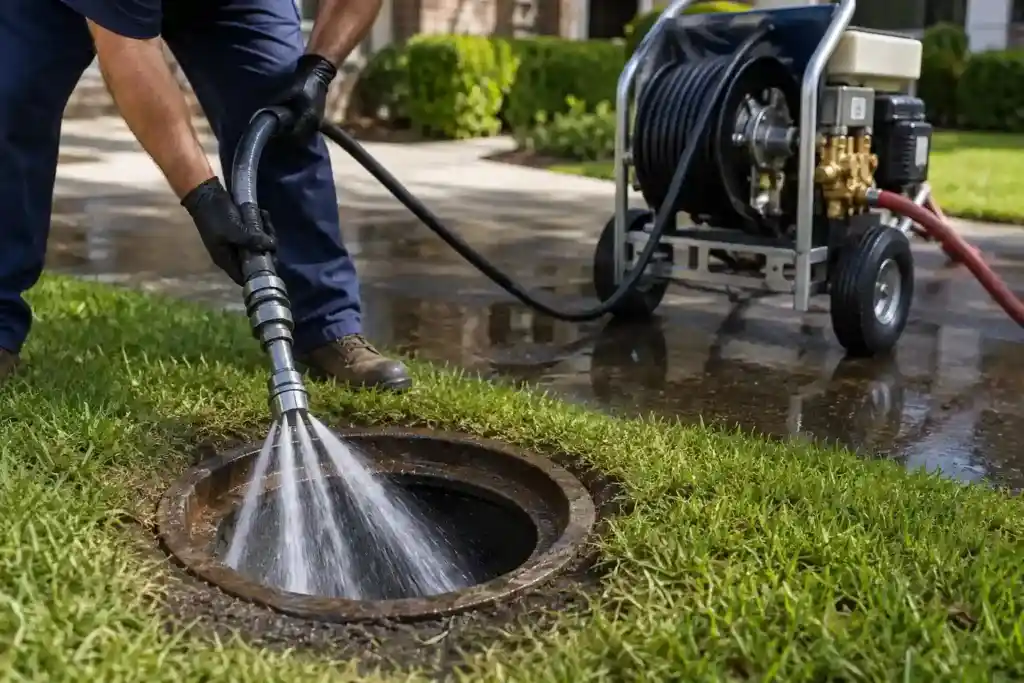
How does hydro jetting work to effectively clear sewer lines? Hydro jetting utilizes high-pressure water streams, typically ranging from 3,000 to 8,000 psi, to dislodge and eliminate stubborn blockages within sewer systems. A specialized nozzle is inserted into the affected pipe, directing water in multiple angles to maximize cleaning efficiency. The force of the water not only removes debris but also scours the interior walls of the pipes, preventing future buildup.
This method is particularly effective against grease, tree roots, and mineral deposits. By employing hydro jetting, plumbing professionals guarantee a thorough cleaning, paving the way for necessary repairs while minimizing the risk of recurring issues. This proactive approach enhances the overall longevity and functionality of sewer lines.
Types of Clogs Hydro Jetting Effectively Eliminates
A variety of clogs can be effectively eliminated through hydro jetting, making it a preferred method for professional plumbers. This technique excels at removing grease buildup, tree roots, mineral deposits, and foreign objects lodged within pipes. Grease clogs often accumulate in kitchen lines, leading to slow drainage; hydro jetting clears these obstructions efficiently. Similarly, tree roots can infiltrate sewer lines, causing significant blockages.
Hydro jetting’s high-pressure water stream disintegrates roots without damaging the surrounding infrastructure. Additionally, it addresses mineral buildup that commonly affects older plumbing systems. Finally, foreign objects, such as toys or debris, can obstruct flow; hydro jetting swiftly removes these impediments, ensuring peak pipe function and preparing the system for necessary repairs.
When to Use Hydro Jetting Before Sewer Repairs
Determining the appropriate time to utilize hydro jetting before sewer repairs is essential for effective maintenance and restoration. This method is particularly beneficial when dealing with significant blockages, such as those caused by grease buildup, tree roots, or mineral deposits. Hydro jetting should be considered when traditional snaking fails to provide a solution or when a thorough cleaning is necessary before undertaking repairs.
Additionally, it is advisable to employ hydro jetting during routine maintenance to prevent future issues from arising. By understanding how hydro jetting works, property owners can guarantee that their sewer systems remain functional and efficient, thereby minimizing costly repairs and prolonging the lifespan of their plumbing infrastructure.
Frequently Asked Questions
Is Hydro Jetting Safe for All Types of Pipes?
Hydro jetting is generally safe for most pipe types, including PVC and cast iron. However, older or damaged pipes may require caution, as high-pressure water can exacerbate existing weaknesses. Proper assessment is essential for effective application.
How Long Does a Hydro Jetting Service Take?
A hydro jetting service typically takes between one to three hours, depending on the severity of the buildup and the length of the pipes. This efficient method effectively clears obstructions, ensuring ideal sewer functionality.
Can Hydro Jetting Prevent Future Clogs?
Hydro jetting can effectively prevent future clogs by thoroughly clearing existing buildup and debris from pipes. This high-pressure cleaning method enhances flow, reducing the likelihood of blockages and promoting long-term plumbing health.
What Equipment Is Used During Hydro Jetting?
Hydro jetting equipment includes a high-pressure water jetting machine, specialized nozzles, and hoses designed to withstand intense pressure. This setup effectively removes clogs and buildup in sewer lines, ensuring ideal flow and system maintenance.
How Often Should Hydro Jetting Be Performed?
Hydro jetting should be performed every 1 to 2 years, depending on the severity of buildup and the frequency of use. Regular maintenance guarantees ideal drainage, preventing costly repairs and prolonging the lifespan of sewer systems.
Conclusion
To summarize, hydro jetting serves as a critical preparatory step for sewer repairs by effectively removing tough buildups such as grease, roots, and mineral deposits. Its high-pressure water streams offer significant advantages over traditional methods, ensuring thorough cleaning and enhanced pipe functionality.
By addressing clogs proactively, hydro jetting not only facilitates necessary repairs but also minimizes the risk of future blockages, ultimately leading to improved system reliability and cost-efficiency in sewer maintenance.
You May Also Like To Read: